
The Hidden Pitfalls of Algorithmic Medicine
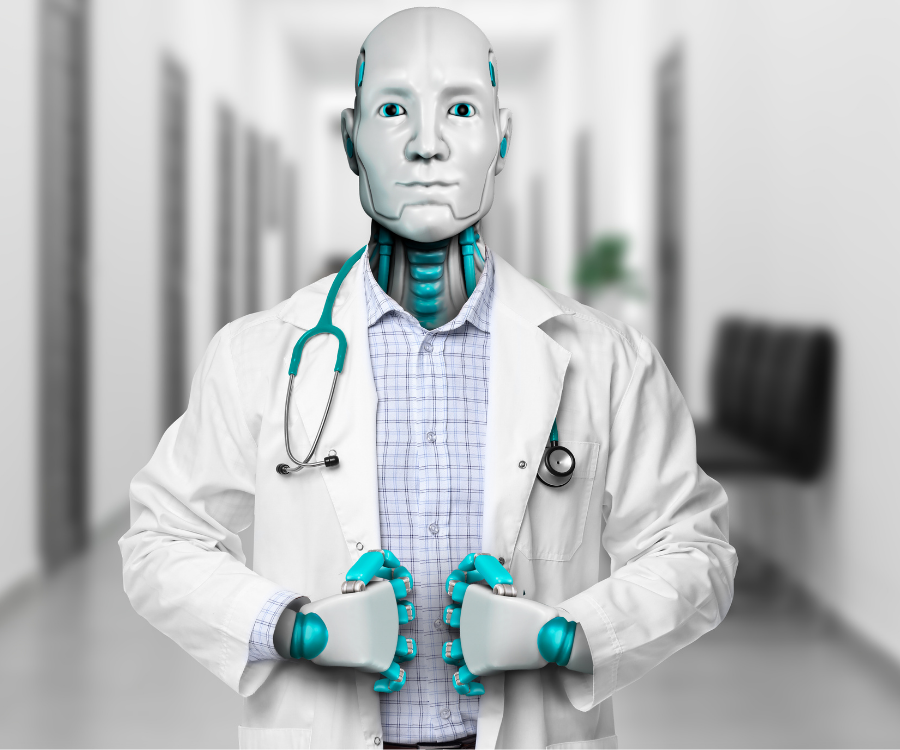
The Hidden Pitfalls of Algorithmic Medicine: Real Risks of Relying on AI for Clinical Decisions
Artificial intelligence has entered clinical workflows with unprecedented speed. From predicting sepsis events to flagging micro-calcifications in mammography, machine learning and large language models (LLMs) are pitched as essential co-pilots for overburdened health systems.
Yet medicine is not a standard predictive analytics environment. It is an intricate, non-deterministic landscape where data missingness is rife, biological variation is vast, and a miscalculated decimal carries human stakes. When healthcare organizations pivot from using AI as an assistive second check to leaning on it as a primary clinical arbiter, serious failure modes emerge.
1. Automation Bias and Cognitive Deskilling
One of the most immediate hazards of clinical AI is psychological rather than computational: automation bias. When clinicians face alert fatigue, heavy patient loads, and compressed consultation windows, the temptation to defer to an algorithm grows significantly.
-
Heuristic capitulation: Studies in diagnostic radiology and pharmacology show that clinicians frequently change a correct clinical decision to an incorrect one after receiving bad advice from a clinical decision support system (CDSS).
-
Erosion of intuition (deskilling): Junior clinicians trained in environments where algorithms interpret scans or pre-populate differentials risk losing situational awareness and diagnostic calibration. When a novel presentation or edge-case pathology arrives that sits outside the model’s training distribution, human discernment may have already atrophied.
As clinicians often note, just because autopilot can maintain cruising altitude does not mean flight schools should train pilots to be passengers. Medicine demands the same vigilance.
2. Algorithmic Bias and Compounding Disparities
AI does not generate clinical truth from first principles; it recognizes statistical patterns embedded in retrospective healthcare records. Those records reflect systemic healthcare disparities, socioeconomic barriers, and variable diagnostic rates across demographics.
When an algorithm optimizes for historical outcomes or proxies like healthcare expenditure, it can inadvertently rank underserved patient populations as lower risk simply because less capital was spent on them historically. Deploying such systems at scale turns historical inequities into automated policy.
3. The “Black Box” Problem and Hallucinated Reasoning
Deep neural networks excel at extracting complex, high-dimensional features, but they rarely explain their underlying physiological rationale.
-
Uninterpretable outputs: A risk score or triage flag without biological interpretability leaves the clinician unable to verify whether the algorithm is identifying true pathology or merely anchoring to artifacts (such as specific hospital scanner watermarks, bed types, or documentation habits).
-
Generative AI hallucinations: LLMs deployed for clinical notes, diagnostic synthesis, or patient triaging can generate plausible, confident sounding medical assertions with fabricated references. A subtly erroneous recommendation—such as conflating “denied chest pain” with “described atypical pressure”—can derail triage decisions before a physician ever enters the room.
4. Dataset Shift and the Generalizability Gap
An AI model validated with high sensitivity in an elite academic research hospital frequently stumbles when deployed in a rural clinic or a safety-net facility. This drop in performance is known as dataset shift.
Differences in laboratory equipment calibration, patient comorbidity profiles, and electronic health record (EHR) documentation styles all degrade model calibration. A sepsis model calibrated to one institution’s aggressive blood-culture protocols can flood another hospital’s staff with false positives, eroding institutional trust and worsening alarm fatigue.
5. Ambiguous Liability: Who Owns the Malpractice?
The legal consensus surrounding algorithmic medicine is straightforward: AI is a tool, not a liability shield.
| Governance Layer | Current Reality | Clinical Risk |
| Provider Accountability | Courts hold the treating clinician responsible for the standard of care. | A doctor cannot plead “the algorithm told me to do it”. |
| Vendor Disclaimers | Software terms classify clinical tools as purely “assistive” or “advisory.” | Liability shifts away from the developer back to health systems and providers. |
| Regulatory Oversight | FDA Software as a Medical Device (SaMD) clearances monitor safety, but post-market drift checks remain variable. | Clinicians must navigate models that silently drift in accuracy over time. |
If an algorithm misses a subtle intracranial hemorrhage or suggests an inappropriate medication interaction, the physician who signed off on the chart bears primary medical malpractice exposure.
Balancing Innovation with Clinical Prudence
AI holds immense promise for eliminating repetitive operational friction and surfacing non-obvious clinical correlations. However, preserving patient safety requires treating AI outputs as raw input rather than authoritative judgment.
Safe clinical integration demands that healthcare systems enforce mandatory human-in-the-loop workflows, demand explainable model architectures, independently validate tools against local patient demographics, and cultivate a culture where clinicians feel empowered to interrogate and override machine recommendations.